

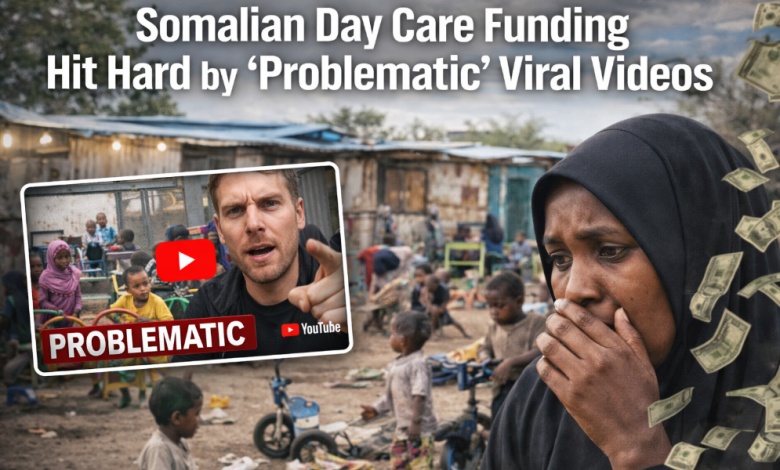
Community leaders and advocacy groups say several Somalian-run day care centers are facing unexpected financial strain after a wave of viral online videos sparked renewed public scrutiny and disrupted funding conversations.
The concern follows the circulation of widely shared videos from independent creator Nick Shirley, which critics say have reshaped online discourse around public assistance, oversight, and accountability. While the videos do not focus on child care directly, advocates argue their broader impact has created a chilling effect that is now being felt across community services.
“These videos have changed the conversation,” said one local organizer. “When complex issues are reduced to viral clips, it creates confusion — and confusion affects funding.”
According to community representatives, enrollment numbers have softened and donor confidence has become less predictable in recent months. Several leaders emphasized that the problem is not transparency itself, but the way online narratives can quickly spiral without proper framing or context.
“This isn’t about facts,” one advocate explained. “It’s about how those facts are presented, shared, and interpreted by audiences who may not understand the full picture.”
Officials stress that the centers continue to provide essential services and remain committed to early childhood development, cultural inclusion, and community support. However, they warn that sustained online scrutiny has forced administrators to divert time and resources away from children and toward public relations, compliance explanations, and media response.
Advocacy groups are now calling for increased public funding to stabilize operations and offset what they describe as “algorithm-driven disruptions.” Some have also urged social media platforms to take greater responsibility for how viral content can influence public perception and, by extension, budget priorities.
“When online engagement starts determining which programs thrive and which struggle, that’s a systemic issue,” said one policy advisor familiar with the situation.
Supporters of increased funding argue that the focus should remain on protecting children and ensuring continuity of care, rather than allowing viral content cycles to dictate outcomes for community institutions.
As the debate continues, leaders say one thing is clear: when internet narratives shift overnight, funding models must adapt just as quickly.