
Students Demand Grades Reflect Effort, Not Outcomes
Advocates say traditional grading systems fail to account for intention, growth, and emotional labor

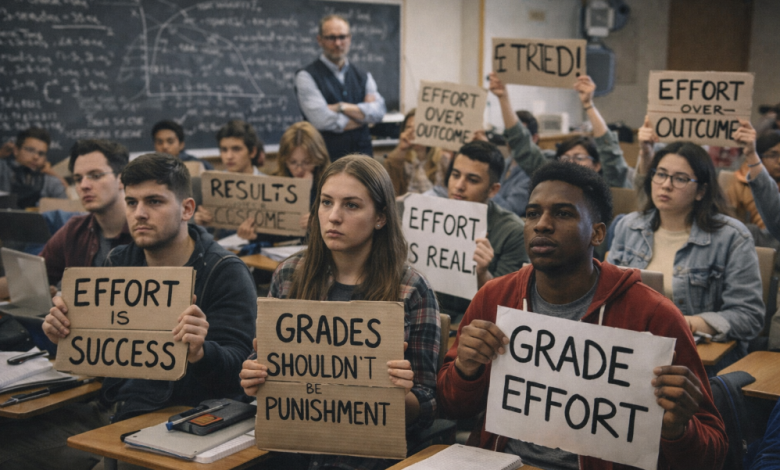
Students at several universities are calling for a fundamental overhaul of grading systems, arguing that academic evaluations should prioritize effort and personal experience over measurable outcomes.
The movement, which gained traction on social media before spreading to campus forums and student government meetings, challenges long-standing assumptions about merit, performance, and achievement. Supporters say grades based on results alone reinforce outdated standards and ignore the realities of modern learning.
“Not everyone demonstrates knowledge the same way,” said one student organizer. “Effort is real. Struggle is real. And those things should count.”
Under the proposed changes, assignments would be evaluated using a more holistic framework that includes time invested, emotional engagement, and demonstrated commitment to the learning process. Several students emphasized that outcomes-based grading places undue pressure on individuals who may be navigating external stressors, systemic barriers, or competing priorities.
“This isn’t about lowering standards,” one advocate explained. “It’s about redefining what success looks like.”
Faculty responses have been mixed. Some professors expressed concern that removing outcomes from grading could make it difficult to assess mastery of course material. Others acknowledged that traditional grading systems may not fully capture student growth.
“We want students to learn,” said one instructor. “The question is how we define learning.”
Student leaders argue that effort-based grading would encourage participation and reduce anxiety, particularly in high-pressure academic environments. They also suggest the change would foster a more inclusive classroom culture by validating diverse learning experiences.
Critics of the proposal worry that such a system could make grades less meaningful and harder to interpret. Supporters counter that grades have already been misunderstood for years and that clarity is less important than fairness.
University administrators have indicated they are reviewing the proposal and plan to convene a committee to explore potential alternatives to traditional grading models.
For now, students say the conversation itself represents progress.
“Grades shouldn’t tell you what you achieved,” one organizer said. “They should reflect what you went through.”