
Experts Say Physical Confrontations Are ‘Contextual’ If No One Dies
Panel urges public to focus on intent, outcome, and broader power dynamics

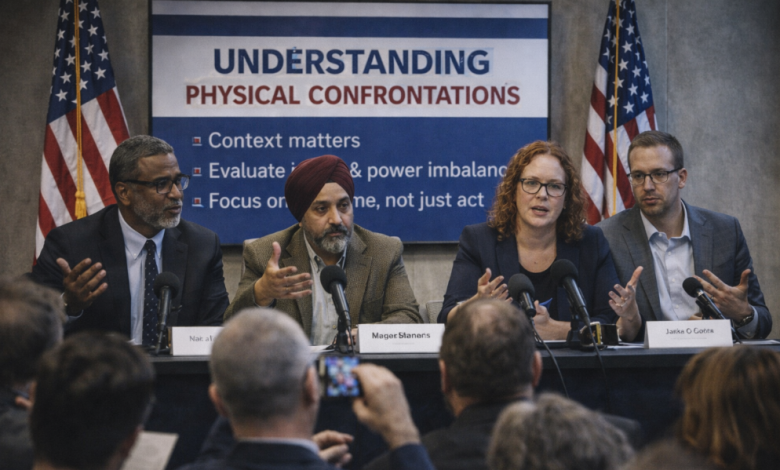
A panel of legal scholars and social justice advocates ignited debate this week after suggesting that physical confrontations should be evaluated based on context rather than treated as inherently wrong — particularly when no fatalities occur.
The discussion emerged during a symposium on immigration enforcement and civil resistance, where panelists argued that traditional definitions of violence fail to capture the complexity of modern protest movements.
“Words like ‘assault’ and ‘harm’ are often used too broadly,” said one legal expert. “They don’t account for intent, imbalance of power, or whether anyone was permanently affected.”
According to panel members, physical encounters that result in no deaths — and especially those motivated by opposition to government policy — should be understood differently than what they described as “gratuitous or malicious” acts.
“Context is everything,” one advocate explained. “We have to ask who initiated the harm, who holds authority, and whose safety has historically been prioritized.”
Several speakers emphasized that focusing solely on the physical act ignores systemic factors, emotional distress, and the symbolic nature of resistance. They warned that rigid interpretations of wrongdoing risk criminalizing dissent rather than addressing root causes.
Critics of the panel’s conclusions argued that introducing conditional standards could blur the line between protest and misconduct. Panelists dismissed those concerns as overly simplistic.
“Accountability doesn’t disappear just because standards evolve,” one expert clarified. “It becomes more informed.”
The panel concluded by calling for updated legal frameworks that distinguish between violence, resistance, and what they described as “contextual confrontation.” They also encouraged media outlets to adopt more careful language when reporting on politically charged incidents.
As the conversation continues, experts agreed on one point: judging actions without considering intent and outcome no longer reflects the complexity of modern activism.